Winter Weather Preparedness
Southern living generally means mild winters with little to no snow. However, 2026 proved to be the exception, with two back-to-back storms hitting the Carolinas.
On Jan. 24-25, Winter Storm Fern brought ice, freezing rain, and sleet. The following weekend, Jan. 30-Feb. 1, Winter Storm Gianna hit CLT with a historic 11 inches of heavy, continuous snowfall that briefly closed all three runways in near whiteout conditions.
CLT was nearly fully operational within 12 hours of each event.
That’s because CLT tackles winter preparations like a sports team – with a post-season meeting to provide feedback and make recommendations, a pre-season meeting to review those recommendations and lots of practice.
“Some key changes included updates to our airfield priority snow removal routes, additions to our snow removal equipment (SRE) fleet, and aircraft deicing queue routes,” said Brian Zoeckler, CLT Airside Operations Manager.
The new routes the aircraft will take to the deicing pad reflect CLT’s rapidly evolving airfield and ongoing taxiway construction. “We’ve prepared two sets of deicing queue maps… we have to remain flexible,” added Zoeckler.
Practice Makes Perfect
Last year, CLT had a 300-member snow team on site for each winter weather event, working in two 12-hour shifts around the clock.
Safety is always the priority – ensuring that runways and taxiways are safe for airline partners while minimizing disruptions for passengers.
To do that, the Airport deploys a fleet of specialized snow-removal equipment, including multi-function plows, front brooms, material spreaders and a liquid deicer.
During the spring and summer, CLT’s Field Maintenance and Fleet Maintenance teams collaborate to repair and service all snow-removal equipment in preparation for winter. In the fall, the teams are on the runways, practicing “Slant” and “V” formations and moving materials.
“As of Nov. 1, we have begun receiving snow-removal chemicals to ensure CLT maintains an adequate inventory should winter weather operations be required,” said Max Courtney, CLT Airfield Maintenance Manager. “We conducted our first official field training exercise on October 21, 2026. During the exercise, operators practiced airfield snow-removal formations and radio-communications procedures. Two additional training sessions are scheduled to further enhance operational readiness.” (Pictured: Oct., 21, 2026 night training)
Landside Component
However, winter weather preparations don’t just happen on the Airfield.
Another major component is Landside Operations (think shuttle buses, parking lots, shelters and roadways). Landside, along with Building Maintenance, prioritizes clearing roads to and from the terminal, as well as adjacent roads around the Airport. They also focus on parking lots, bus routes and shelters, including plowing and applying de-icing materials.
CLT keeps its regular shuttle schedule during storms, utilizing its fleet of 70 buses and 130 drivers.
“Our primary goal is always to safely transport passengers and airport employees to and from the terminal,” said Sam Singh, CLT Landside Operations Manager. “There are 24,000 badge holders who park in the employee and crew lots, and if we can’t get them to the terminal, flights can’t depart, TSA can’t open and concessions can’t operate.”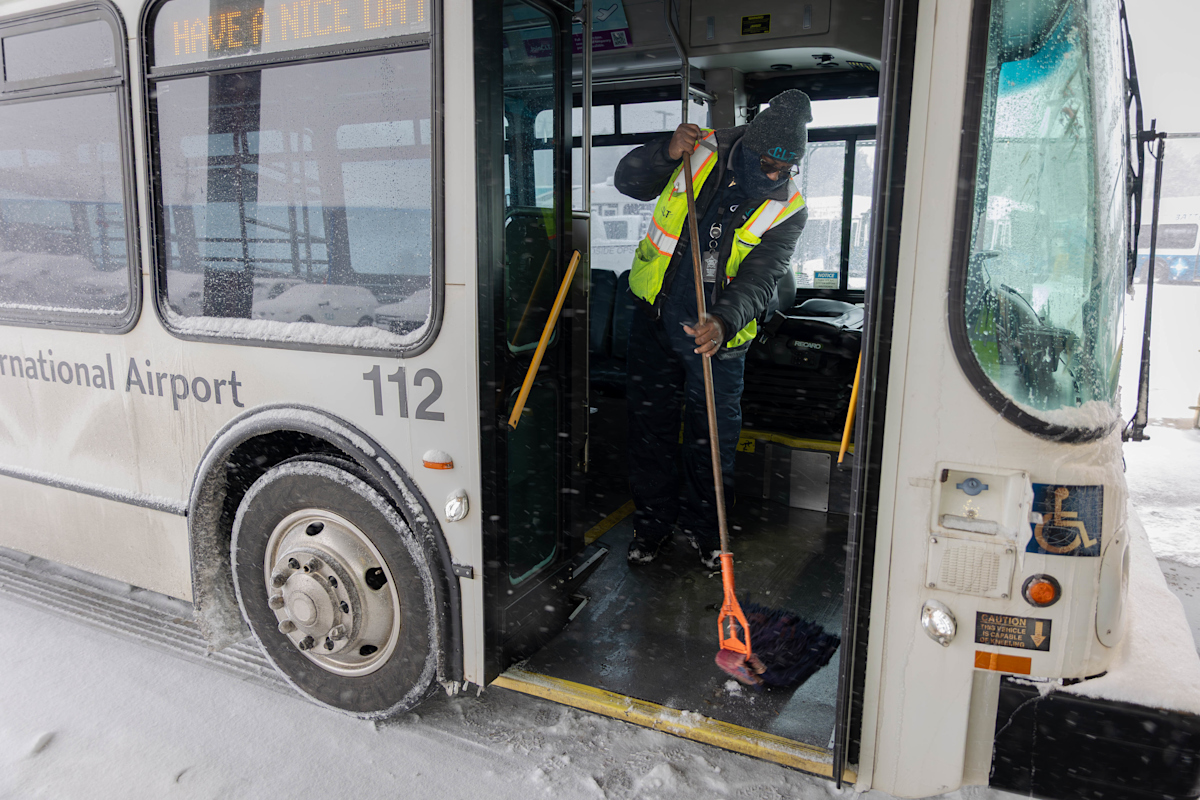
StormReady Certified Through 2030
CLT recently achieved its third StormReady certification through the National Weather Service—Greenville-Spartanburg (NWS-GSP), extending its designation through 2030.
First recognized in 2018, CLT remains among a select group of airports nationwide and one of only two airports in North Carolina to maintain this distinction. This recognition exemplifies CLT’s sustained commitment to severe weather preparedness, operational resilience, and the safety of passengers, employees and airport stakeholders.